
Trump’s threat to abandon CHIPS Act ‘horrific idea’ Raimondo says
In an interview with Breaking Defense, Sen. Mark Kelly said he would be talking to a member of the Trump team this week to advocate for the CHIPS Act's continued survival.
In an interview with Breaking Defense, Sen. Mark Kelly said he would be talking to a member of the Trump team this week to advocate for the CHIPS Act's continued survival.

The Department of Commerce announced it is awarding BAE Systems Inc. and Rocket Lab a CHIPS Incentive Award worth up to a combined $59.4 million.


As threats continue to evolve, speed will increasingly depend on what is already available when the need emerges.

Most of the funding, $148 million, will go directly to the eight Microelectronic Common hubs spread across the country.

"We're taking a very aggressive, innovative approach" to combating China's tech strategy, Commerce Secretary Gina Raimondo said at the Reagan Forum.
As the Defense Department hails a key step in strengthening America's microelectronic supply base with eight new hubs, a looming government shutdown casts a long shadow.

"Replicator should be a triumphant moment for modern American industrial policy and free market economics — not an attempt to emulate China’s command economy over the proven value of American ingenuity," write Jeff Decker and Noah Sheinbaum.


A commitment to long-term operational value.
“To stay ahead of our competitors, the Department of Defense needs access to the commercial supply chain of microelectronics," William LaPlante, USD A&S, said. "It is absolutely essential, but it comes with inherent risks. The independent panel review is helping us better understand the risk-based approach we need to take."
While key executives tell Breaking Defense they have adjusted to the new normal, experts worry IT supply chain vulnerabilities could be exploited in the future by adversarial nations.
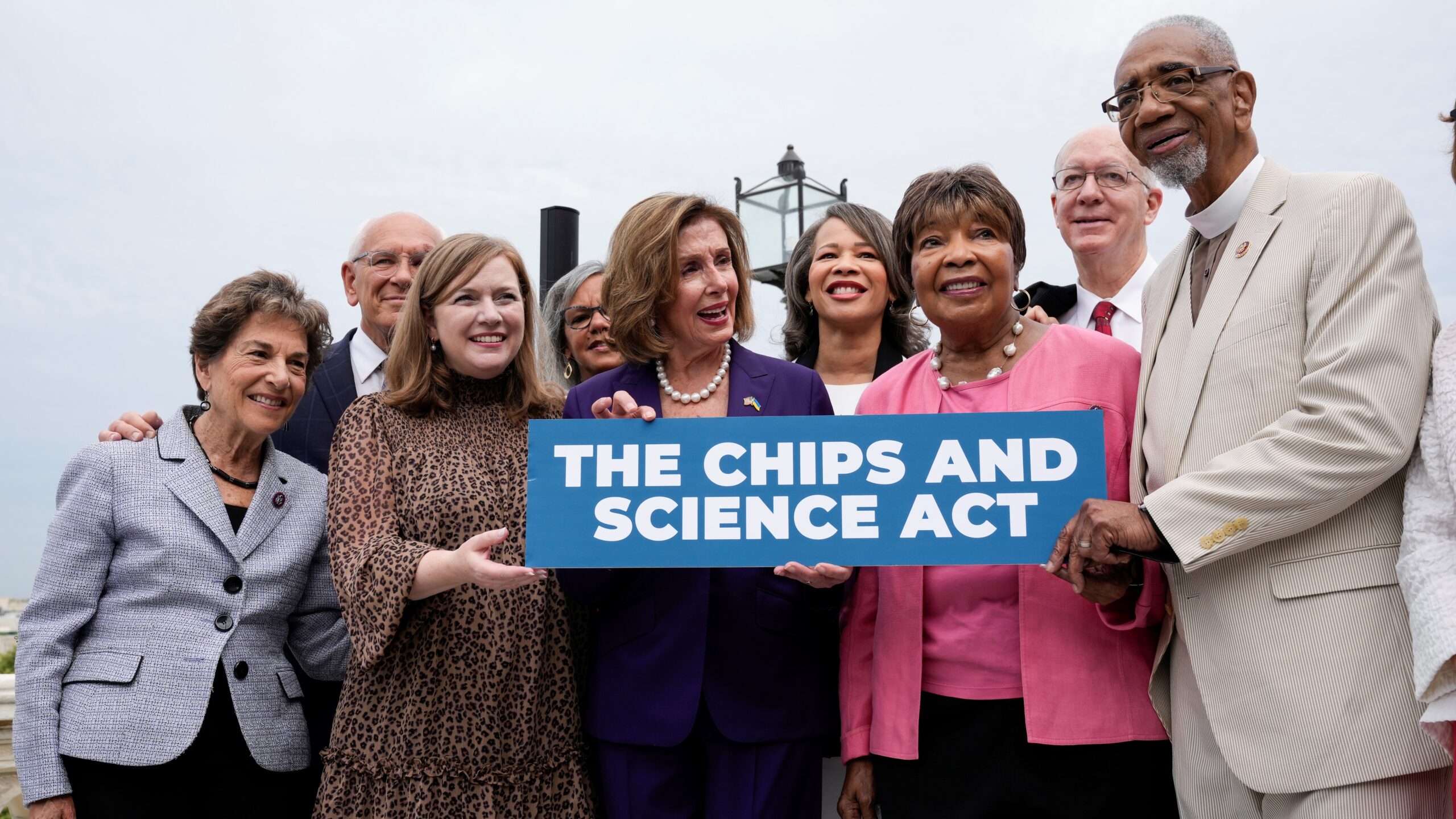
The CHIPS Act has been hailed by supporters as a game-changing piece of legislation in the microelectronics tug-of-war between the US and China. But is it a revolution, or is it just a starting point? In this new op-ed, Alan Shaffer, Mike Fritz and Bob Hummel of the Potomac Institute lay out how much more […]
Kea Matory, director of legislative policy at NDIA, told Breaking Defense the bill is a "positive first step" but won't solve America's semiconductor chip woes in the face of growing competition from China.


One commander, many robots: Fully autonomous ground vehicles are reshaping the battlefield.
The Senate voted to subsidize domestic manufacturers of vital computer components. Will national security concerns overcome a longstanding aversion to government-led industrial policy?